<?xml version="1.0" encoding="UTF-8" ?>
<feed xml:lang="ja" xmlns="http://www.w3.org/2005/Atom" xmlns:dc="http://purl.org/dc/elements/1.1/" xmlns:thr="http://purl.org/syndication/thread/1.0">
  <title type="text">na tsu tsu ba ki </title>
  <subtitle type="html">vocalise 
 

     ☆　　　　japanese foods and japanese family cooking</subtitle>
  <link rel="self" type="application/atom+xml" href="http://natsutsubaki.cooklog.net/atom"/>
  <link rel="alternate" type="text/html" href="http://natsutsubaki.cooklog.net/"/>
  <updated>2010-01-04T10:47:41+09:00</updated>
  <author><name>Tomoko</name></author>
  <generator uri="//www.ninja.co.jp/blog/" version="0.9">忍者ブログ</generator>
  <atom10:link xmlns:atom10="http://www.w3.org/2005/Atom" rel="hub" href="http://pubsubhubbub.appspot.com/" />
  <entry>
    <id>natsutsubaki.cooklog.net://entry/6</id>
    <link rel="alternate" type="text/html" href="http://natsutsubaki.cooklog.net/my%20cooking%20recipe/gyu%20don" />
    <published>2010-12-06T20:50:04+09:00</published> 
    <updated>2010-12-06T20:50:04+09:00</updated> 
    <category term="my cooking recipe" label="my cooking recipe" />
    <title>Gyu don</title>
    <content mode="escaped" type="text/html" xml:lang="utf-8"> 
      <![CDATA[<a href="//natsutsubaki.cooklog.net/File/IMG_5971.jpg" target="_blank"><img src="//natsutsubaki.cooklog.net/Img/1263361811/" border="0" alt="" /></a><br />
<br />
<br />
<br />
<br />
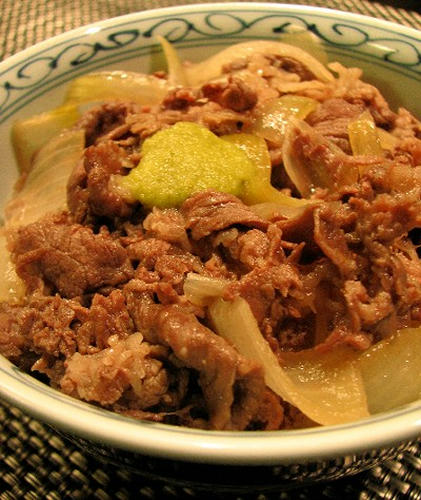
Gyudon (beef bowl) is a popular domburi dish consisting of beef and onion served over a bowl of rice. The meat and onion are cooked in a mixture of soy sauce, mirin, sugar and sake giving the dish a sweet, salty flavour.<br />
<br />
<br />
<br />
<br />
<br />
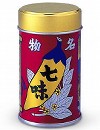
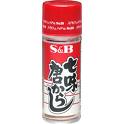
Typically,  shichimi (red chili mix) are available at the table and added to taste.<br />
<br />
<a href="//natsutsubaki.cooklog.net/File/756e2e4b.jpg" target="_blank"><img src="//natsutsubaki.cooklog.net/Img/1263361946/" border="0" alt="" /></a> <a href="//natsutsubaki.cooklog.net/File/images.jpg" target="_blank"><img src="//natsutsubaki.cooklog.net/Img/1263361985/" border="0" alt="" /></a><br />
<br />
※ Shichimi "seven flavor chili pepper" is a common Japanese spice mixture<br />
containing seven ingredients.<br />
The main ingredient is coarsely ground red chili pepper,<br />
 to which is typically added: yuzu peel, sesame seed, poppy seed, hemp seed,nori, ground sansho (japanese pepper) .<br />
<br />
Today,I added yuzukosyou.<br />
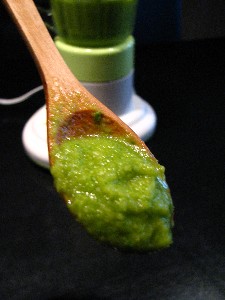
Yuzukoshou is a one of Japanese seasoning.<br />
 It is a paste made from chili peppers, yuzu peel, salt and liquor.<br />
 It is usually used as a condiment for nabemono dishes.<br />
Sometimes I added it a little for dressing for vegetable salad .<br />
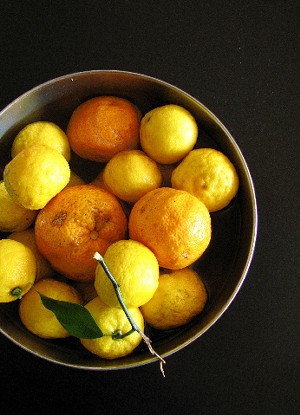
Last month, I harvested yuzu in the garden of my husband's parents yard. and I Made yuzukosyou.<br />
Yuzu is the Japanese citrus fruit give a discreet aroma and flavor.I love it!<br />
<br />
<a href="//natsutsubaki.cooklog.net/File/1260952228.jpg" target="_blank"><img src="//natsutsubaki.cooklog.net/Img/1263362392/" border="0" alt="" /></a><br />
 <br />
<br />
INGREDIENTS   (4 servings)<br />
<br />
<br />
450g short-grain rice  (or  980g cooked rice)<br />
1  medium onion<br />
400g wagyu beef (for sukiyaki slices)<br />
<br />
(Broth)<br />
<br />
300ml   water<br />
40ml   soy sauce<br />
50ml    sake<br />
40ml    mirin<br />
15g     sugar<br />
<br />
<br />
DIRECTIONS<br />
<br />
1,    Cook the rice.<br />
<br />
2, Slice onion thinly.<br />
     Cut beef slices into 1.5-inch lengths.<br />
<br />
3, Heat the broth ingredients in a saucepan.<br />
   Add the onion and cook over medium heat for 3 minutes until tender.<br />
<br />
4, Add the beef and cook for 3 minutes.<br />
<br />
5, In the meantime,divide cooked rice among 4 deep bowls.<br />
   place each portion over the four rice servings.<br />
<br />
6, Dribble remaining broth in saucepan over each servings.<br />
<br />
<br />
<br />
<a href="//natsutsubaki.cooklog.net/File/1262586384.jpg" target="_blank"><img src="//natsutsubaki.cooklog.net/Img/1263362466/" border="0" alt="" /></a><br />
<br />
yuzu]]> 
    </content>
    <author>
            <name>Tomoko</name>
        </author>
  </entry>
  <entry>
    <id>natsutsubaki.cooklog.net://entry/2</id>
    <link rel="alternate" type="text/html" href="http://natsutsubaki.cooklog.net/japanese%20sweets/oshiruko" />
    <published>2010-01-06T09:58:18+09:00</published> 
    <updated>2010-01-06T09:58:18+09:00</updated> 
    <category term="japanese sweets" label="japanese sweets" />
    <title>oshiruko</title>
    <content mode="escaped" type="text/html" xml:lang="utf-8"> 
      <![CDATA[<a href="//natsutsubaki.cooklog.net/File/1228489726.jpg" target="_blank"><img src="//natsutsubaki.cooklog.net/Img/1262739475/" border="0" alt="" /></a><br />
<br />
<br />
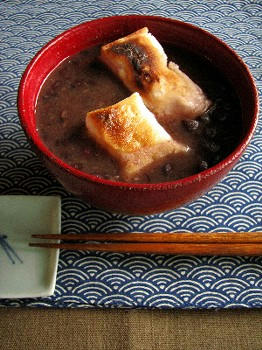
Shiruko  or oshiruko , is a traditional Japanese dessert.<br />
 It　is a sweet porridge of azuki beans boiled and crushed, served in a bowl with mochi.<br />
<br />
It is loved by many Japanese, especially during the winter.<br />
<br />
I make oshiruko  from the azuki red beans.<br />
but it takes time to cook.<br />
so,If you can get anko(sweet red bean paste),<br />
 you can make easily .<br />
<br />
<br />
<span style="font-size:220%">ingredients</span><br />
(Makes 4 servings)<br />
<br />
8  blocks mochi  ( rice cakes)<br />
400g    anko (sweet red bean paste)<br />
500cc   water<br />
pinch of salt     <br />
<br />
<br />
Preparation:<br />
<br />
1,Mix anko with water in a medium pot and simmer on medium heat. <br />
  Stop the heat just before it comes to a boil.<br />
<br />
2, Grill mochi in the  oven until softened. <br />
<br />
3, Place grilled mochi into bowls.<br />
<br />
4,  Pour hot soup over mochi.<br />
<br />
<br />
<a href="//natsutsubaki.cooklog.net/File/004912_1.jpg" target="_blank"><img src="//natsutsubaki.cooklog.net/Img/1262742349/" border="0" alt="" /></a><br />
<br />
anko<br />
<br />
Red bean paste is used in many Japanese sweets.<br />
<br />
Tsubuan :  whole red beans boiled with sugar but otherwise untreated <br />
Koshian :  which has been passed through a sieve to remove bean skins.<br />
<br />
]]> 
    </content>
    <author>
            <name>Tomoko</name>
        </author>
  </entry>
  <entry>
    <id>natsutsubaki.cooklog.net://entry/1</id>
    <link rel="alternate" type="text/html" href="http://natsutsubaki.cooklog.net/my%20cooking%20recipe/%20zo-ni" />
    <published>2010-01-04T11:45:36+09:00</published> 
    <updated>2010-01-04T11:45:36+09:00</updated> 
    <category term="my cooking recipe" label="my cooking recipe" />
    <title> zo-ni</title>
    <content mode="escaped" type="text/html" xml:lang="utf-8"> 
      <![CDATA[<i>O ZO-NI</i>  <br />
<br />
  (rice cake boiled in soup)<br />
<br />
<a href="//natsutsubaki.cooklog.net/File/IMG_5977.jpg" target="_blank"><img src="//natsutsubaki.cooklog.net/Img/1262572988/" border="0" alt="" /></a><br />
<br />
<br />
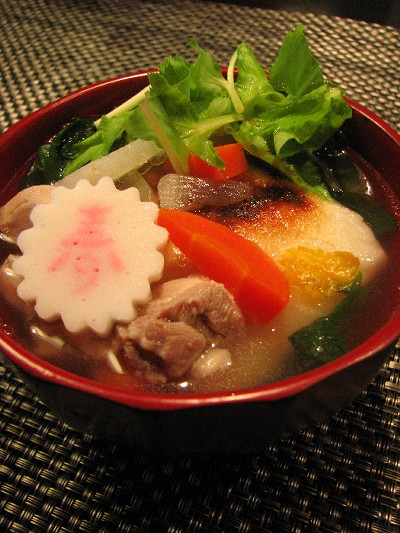
zōni is a Japanese soup containing mochi( rice cakes). <br />
The dish is the traditional Japanese New Year  foods.<br />
<br />
<br />
As for ways of cooking the soup, different regions in Japan sport many variations, but in most cases it is either a clear soup (sumashi-jiru) flavoured with dashi (stock usually made from flakes of dried bonito) and soy sauce, generally preferred in eastern parts of the country, or a miso soup generally preferred in the western parts.<br />
<br />
mochi is cut into a rectangle in eastern Japan, whereas in western Japan the mochi is usually round. <br />
<br />
My zo-ni is eastern style<br />
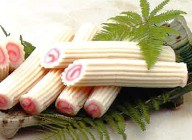
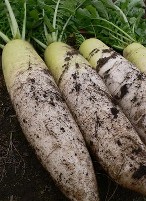
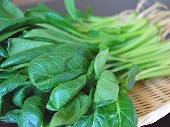
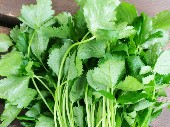
I use chicken,komatsuna( leafy vegetables), mitsuba (a Japanese herb similar to parsley) , naruto, daikon, carrot, and flakes of yuzu peel . <br />
<br />
<br />
<a href="//natsutsubaki.cooklog.net/File/narutomaki_b.jpg" target="_blank"><img src="//natsutsubaki.cooklog.net/Img/1262738929/" border="0" alt="" /></a><br />
naruto is  fish-paste cake, that is sliced and is used to decorate soup.<br />
<br />
<a href="//natsutsubaki.cooklog.net/File/p1030147.jpg" target="_blank"><img src="//natsutsubaki.cooklog.net/Img/1262677665/" border="0" alt="" /></a><br />
  daikon ( Japanese white radish )<br />
<br />
<a href="//natsutsubaki.cooklog.net/File/top.jpg" target="_blank"><img src="//natsutsubaki.cooklog.net/Img/1262677985/" border="0" alt="" /></a><br />
 komatsuna<br />
<br />
<br />
<a href="//natsutsubaki.cooklog.net/File/mituba02.jpg" target="_blank"><img src="//natsutsubaki.cooklog.net/Img/1262678320/" border="0" alt="" /></a><br />
<br />
mitsuba]]> 
    </content>
    <author>
            <name>Tomoko</name>
        </author>
  </entry>
</feed>